
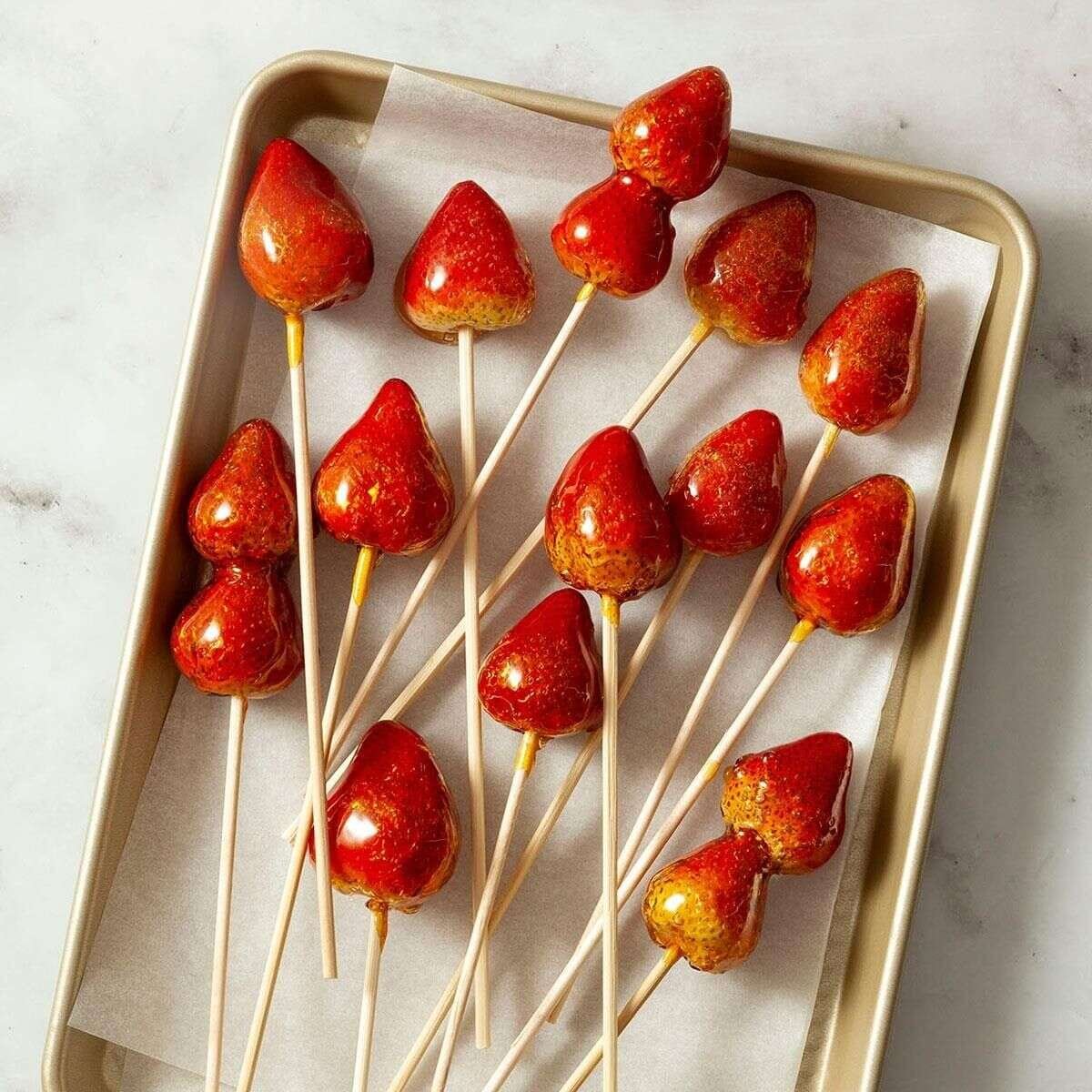
Tanghulu
I make tanghulu when I want a bright, crunchy fruit treat with a glass-like sugar shell. Fresh strawberries become especially beautiful when coated in the clear candy, and I enjoy making them when I want a fun dessert to share.
Tanghulu is traditionally associated with northern China and is commonly made by coating fruit on skewers with hardened sugar syrup. I use firm strawberries here, but the same technique can work with other suitable fruits.
I learned that the most important details are keeping the fruit completely dry, reaching the hard-crack stage, avoiding unnecessary stirring, and working quickly. The candy shell begins setting as soon as it cools.
What Is Tanghulu?
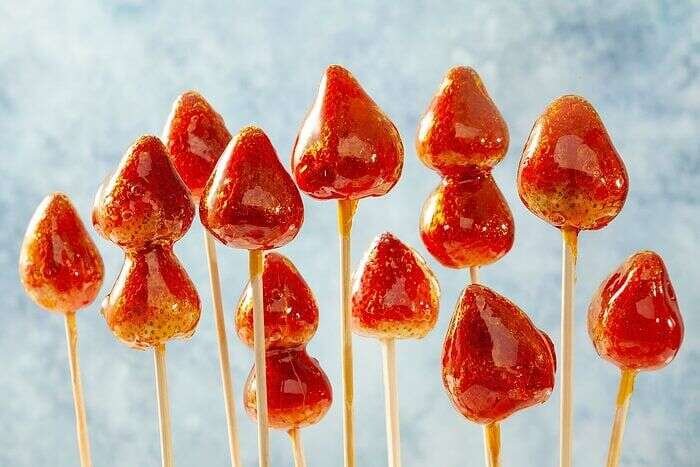
Tanghulu is a Chinese candied-fruit dessert made by dipping skewered fruit into hot sugar syrup and allowing the coating to harden into a crisp shell. Hawthorn berries are traditional, while strawberries, grapes, cherries, kiwi, dragon fruit, pineapple, and other firm fruits can also be used.
The glossy red appearance of strawberry tanghulu makes it especially attractive for celebrations. Tanghulu is also commonly associated with winter and Chinese New Year traditions, when its bright appearance can symbolize good fortune.
History of Tanghulu
Tanghulu is believed to have originated in northern China during the Song Dynasty. A traditional story connects its early history with hawthorn berries prepared in sugar syrup for a member of the imperial court. The sweet-and-sour treat later became a popular street food.
In recent years, tanghulu has gained attention internationally through social media and ASMR videos showing the dramatic crunch of its candy shell. That popularity has also encouraged home cooks to experiment with strawberries and other fruits.
How to Make Tanghulu (Candied Strawberries)
I keep a few things in mind before I start:
- Start with firm fruit: Firm strawberries stay on the skewers more easily and are less likely to leak juice into the hot syrup.
- Choose a practical saucepan: I use a larger saucepan with a sturdy handle so I can safely tilt it and create a deeper pool of syrup for dipping.
- Do not stir the syrup: Stirring can encourage crystallization and leave the candy cloudy or sandy instead of clear.
- Protect yourself: Hot sugar syrup can cause serious burns, so I work carefully and keep children away from the cooking area.
- Work quickly: I keep the parchment-lined baking sheet close to the saucepan because the syrup becomes less workable as it cools.
Tanghulu Ingredients

| Ingredient | Amount |
|---|---|
| Fresh firm strawberries | 16 |
| Sugar | 2 cups |
| Water | 1 cup |
I choose firm, slightly underripe strawberries because soft berries can slip from the skewer and release moisture. The sugar syrup uses the original two-parts-sugar-to-one-part-water ratio.
Directions
Step 1: Dry the strawberries
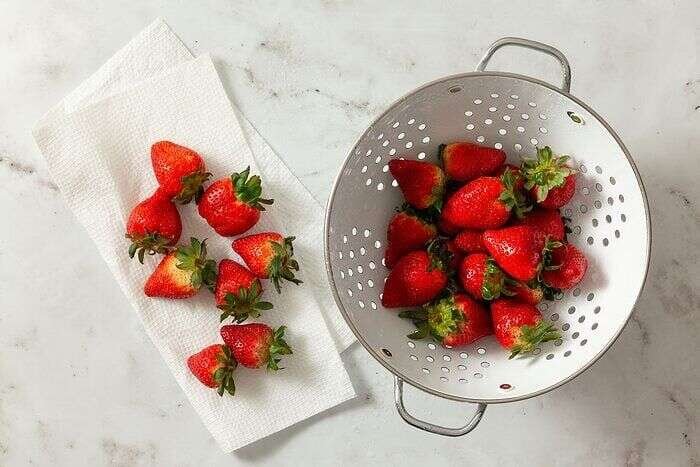
I remove the strawberry stems, wash the berries, and let them dry completely. I make sure there is no surface water because the sugar syrup will not adhere properly to wet fruit.
Step 2: Skewer the strawberries
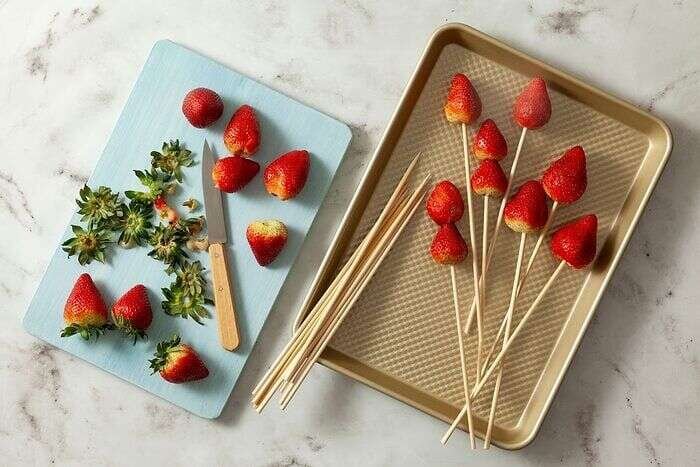
I thread each strawberry onto a wooden skewer, keeping the berries toward the tip. I usually use one or two strawberries per skewer so each piece remains easy to dip.
Step 3: Make the syrup
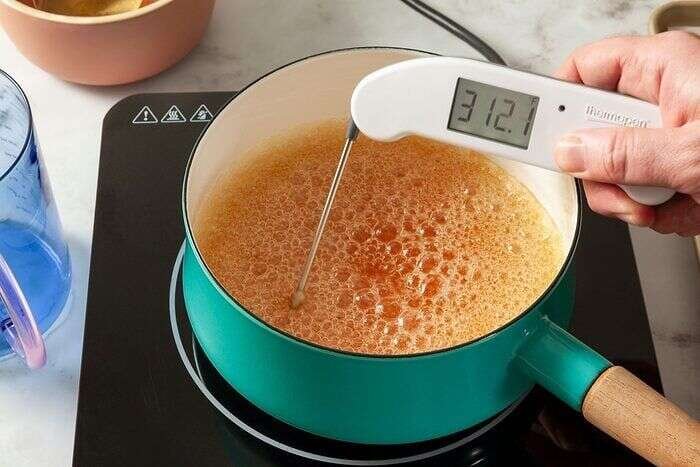
In a large heavy saucepan, I combine the sugar and water. I bring the mixture to a boil without stirring and cook it over medium heat until a candy thermometer reads 300° to 310°F, the hard-crack stage. I remove the syrup from the heat.
This usually takes about 10 minutes, but I rely on the thermometer rather than time alone. Candy syrup is extremely hot, so I handle the saucepan carefully.
Step 4: Dip the fruit
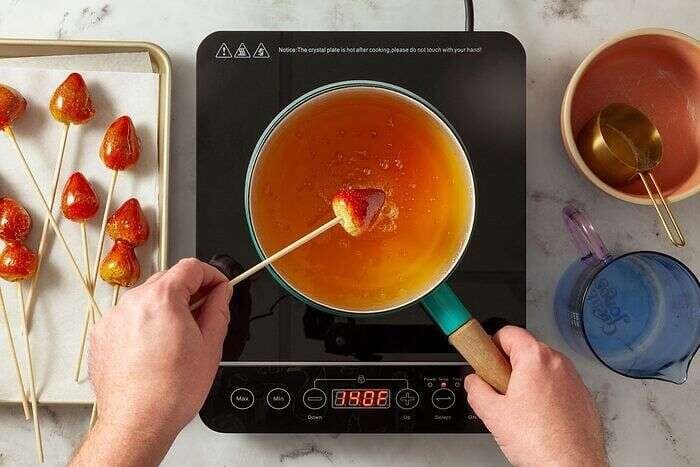
Working quickly, I dip each strawberry into the syrup and place the skewer on a parchment-lined baking sheet. I let the coated fruit stand for two to three minutes until the sugar hardens, then serve it immediately.
I carefully tilt the saucepan so the syrup pools deeply enough for dipping. I prefer dipping the fruit into the pooled syrup rather than spooning syrup over it, which can introduce bubbles and cool the syrup more quickly.
Tanghulu Variations
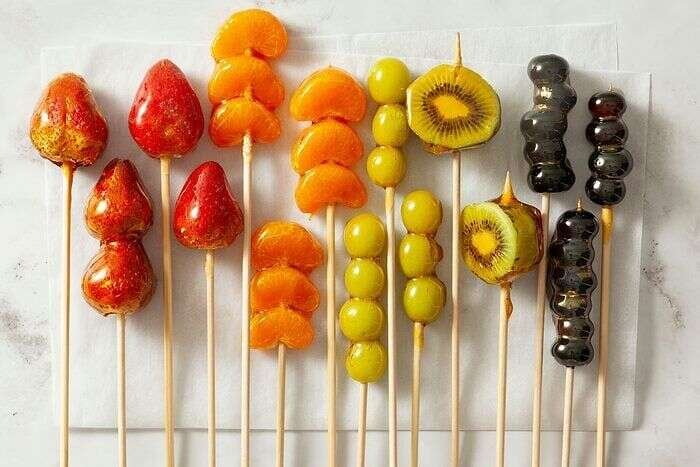
- Use other fruit: I can try blueberries, green grapes, kiwi, mandarin oranges, or cherry tomatoes. I avoid very juicy sliced fruit because excess moisture makes the candy shell difficult to form.
- Add corn syrup: I can add 1/4 cup corn syrup to the sugar and water to help reduce crystallization. The syrup may reach the hard-crack stage more quickly.
- Add flavor and texture: I can experiment with honey, toasted sesame seeds, sprinkles, crushed nuts, or a small amount of food coloring.
How to Store Tanghulu
I prefer to eat tanghulu immediately because the candy shell is crispest when freshly made. If I have leftovers, I can store them in an airtight container in the refrigerator for up to three days, although the shell will become harder and some fruits may soften.
Tanghulu Tips
Can you make tanghulu without a candy thermometer?
Yes. I can use the cold-water test if I do not have a candy thermometer. I drop a small amount of hot syrup into cold water; at the hard-crack stage, it forms a hard, brittle piece rather than a soft or flexible ball. A thermometer is still the more precise option.
Why is tanghulu sticky instead of crunchy?
If the coating remains sticky or chewy, the syrup may not have reached the hard-crack stage. I make sure it reaches 300° to 310°F before removing it from the heat and dipping the fruit.
Watch How to Make Tanghulu
For another sweet homemade treat, I also enjoy my easy plum pudding and my easy Amish sugar cookies when I want something different for dessert.
Frequently Asked Questions
What fruit works best for tanghulu?
I like firm, slightly tart fruits because their moisture is easier to manage and their flavor balances the very sweet candy shell. Strawberries, grapes, blueberries, kiwi, and hawthorn berries are useful options.
How do I keep tanghulu crunchy?
I dry the fruit completely, cook the syrup to the hard-crack stage, avoid stirring the syrup, and serve the finished tanghulu promptly. Humidity and moisture can soften the shell.
Can I make tanghulu ahead of time?
I prefer not to make it far ahead because the candy shell gradually loses its ideal crisp texture. For the best crunch, I make it shortly before serving.
Why did my sugar syrup crystallize?
Stirring the syrup after it begins boiling can encourage crystallization. I avoid stirring, use a clean heavy saucepan, and can add 1/4 cup corn syrup if I want additional protection against crystallization.
Nutrition Information
Estimated nutrition per strawberry, assuming 16 strawberries and that each receives a similar amount of sugar coating. Actual values vary with the thickness of the candy shell.
| Nutrition | Amount |
|---|---|
| Calories | 75 kcal |
| Carbohydrates | 19 g |
| Protein | 0.2 g |
| Fat | 0.1 g |
| Fiber | 1 g |
| Sugar | 17 g |
| Sodium | 1 mg |
Finally, Conclusion
I enjoy making tanghulu because the process turns simple strawberries into a glossy, crunchy treat with a dramatic texture. When I keep the fruit dry, reach the hard-crack stage, and work quickly, I can make a beautiful batch at home.
