
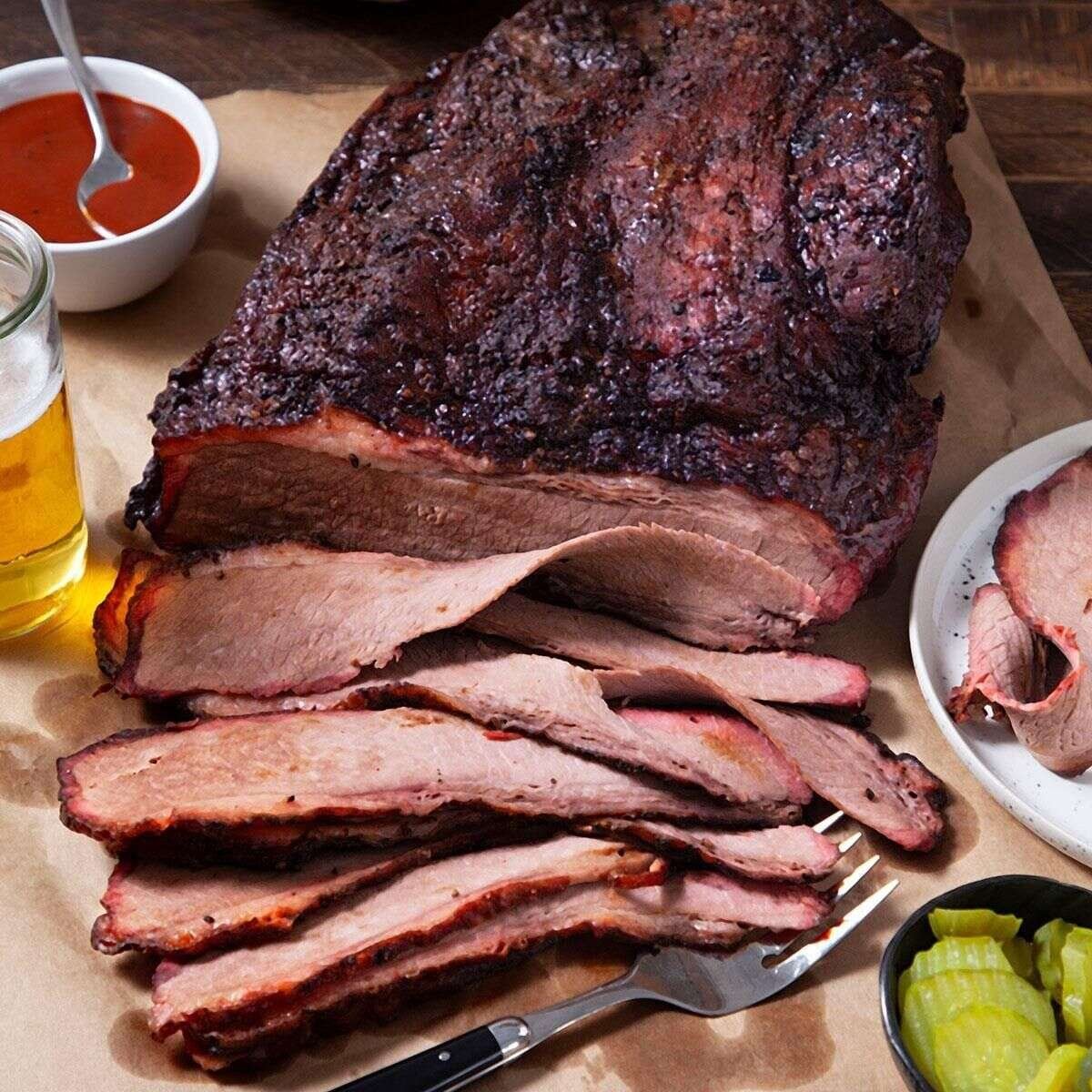
Easy Smoked Brisket Recipe
I love a properly smoked brisket because the combination of a dark, peppery bark and tender beef makes the long cook worthwhile. Over time, I’ve learned that good brisket is less about owning the most expensive smoker and more about following a few dependable low-and-slow cooking principles.
In this guide, I walk through how I select, trim, season, smoke, wrap, rest, and slice a whole brisket. I also share the practical tips I use when I need to plan ahead, store leftovers, or adjust the cooking process.
How I Select a Brisket
A whole brisket, sometimes called a packer brisket, contains two muscles: the lean flat and the fattier point. When I shop for brisket, I look for an evenly thick flat section and plenty of visible marbling. That marbling helps the beef stay flavorful and juicy during the long smoking process.
USDA Prime brisket generally has the most marbling and is my first choice when the price works for me. USDA Choice is another good option when I want to keep the cost lower. I prefer briskets with enough marbling to handle the extended cooking time without becoming dry.
Why I Smoke Brisket Low and Slow
For me, the key to smoked brisket is patience. I trim the excess fat, season the meat simply, and let the smoker do the work at a low temperature. The brisket cooks in two stages so I can build a flavorful bark first and then wrap the meat to help it retain moisture as it finishes.
The wrap also helps with the temperature stall that can happen as brisket cooks. As moisture evaporates from the meat, the internal temperature can stop climbing for a while. Wrapping helps reduce that evaporation and lets the brisket continue toward tenderness.
Smoked Brisket Ingredients
| Ingredient | Amount |
|---|---|
| Fresh whole beef brisket | 1 (12 to 14 pounds) |
| Yellow mustard or olive oil | 3 tablespoons |
| Kosher salt | 2 tablespoons |
| Coarsely ground pepper | 2 tablespoons |
| Onion powder | 2 teaspoons, optional |
Beef brisket: I prefer a whole brisket because it gives me both lean flat slices and richer point meat, with plenty of leftovers for sandwiches, tacos, or other meals.
Yellow mustard or olive oil: I use mustard to help the seasoning adhere to the beef and contribute to a flavorful bark. Olive oil can be used instead if preferred.
Seasonings: I keep the seasoning simple with kosher salt, coarsely ground pepper, and optional onion powder so the beef and smoke remain the main flavors.
Directions
Step 1: Trim the brisket
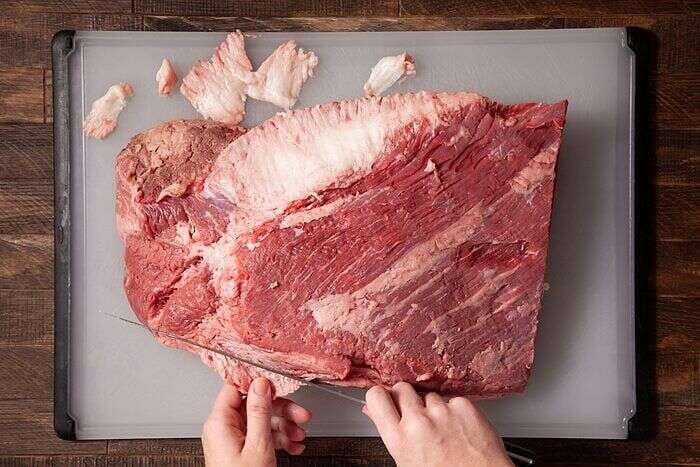
Place the brisket on a cutting board, fat side down.
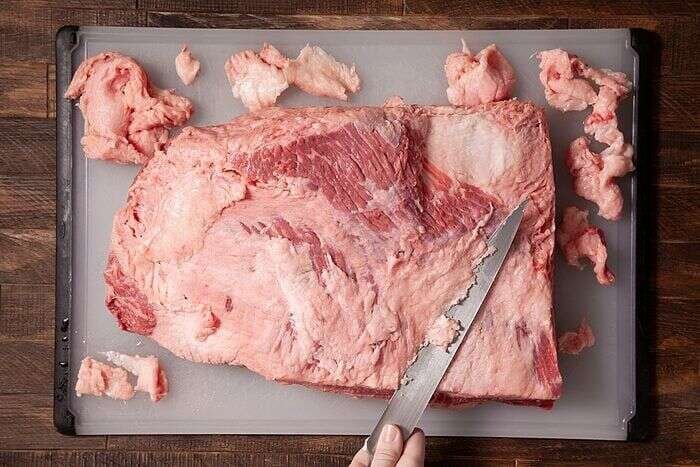
Trim the silverskin and fat from the top of the brisket. Turn the brisket over, and trim the fat to 1/4-inch thickness.
My Tip: I find cold brisket much easier to trim, so I keep the meat refrigerated until I’m ready to work on it.
Step 2: Season the brisket
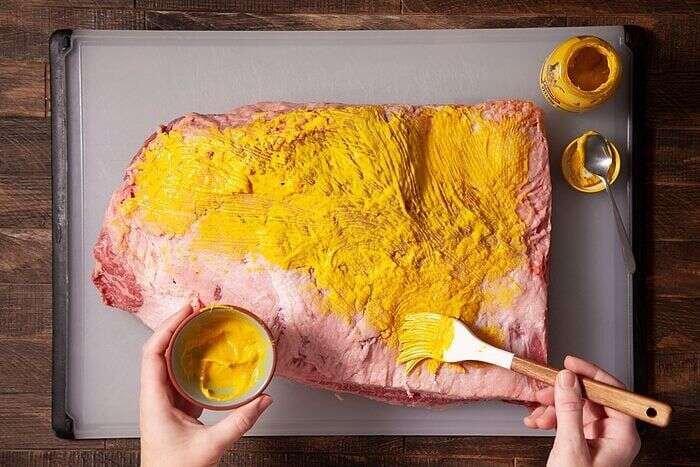
Brush mustard over both sides of the beef.
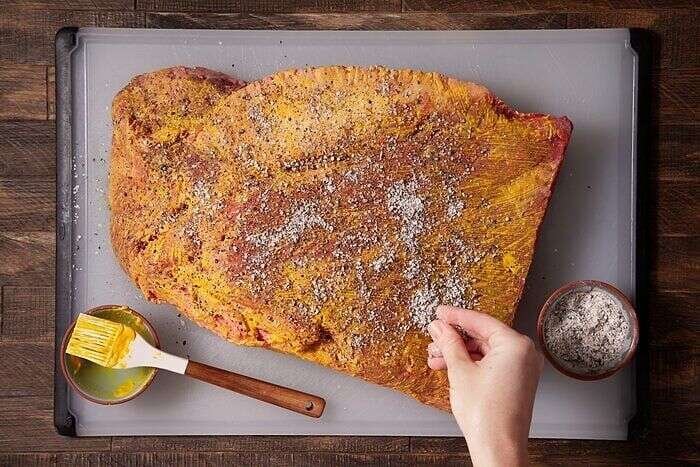
Combine the salt, pepper and, if desired, onion powder. Rub the mixture over both sides of the beef. Let stand at room temperature for one hour.
My Tip: I let the seasoned brisket come to room temperature before it goes into the smoker because I find that it cooks more evenly. The smoke ring is mainly visual and does not determine the flavor of the finished brisket.
Step 3: Smoke the brisket
Preheat the smoker to 225°. Add wood chips or pellets to the smoker according to the manufacturer’s directions.
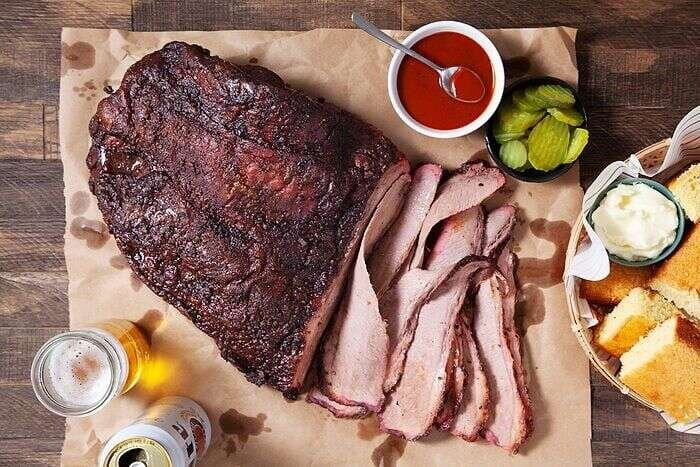
Place the brisket in the smoker fat side up with the point facing toward the heat source. Smoke until a thermometer inserted in beef reads 165° and a dark bark has formed, about eight hours.
My Tip: Because the point is fattier and bulkier than the flat, I position it toward the heat source so the brisket cooks more evenly.
Step 4: Wrap the brisket
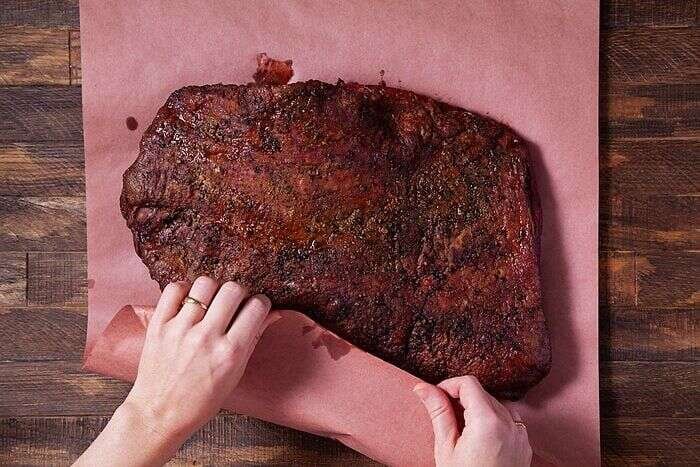
Wrap the brisket securely in unwaxed butcher paper. Continue to smoke until a thermometer inserted in the beef reads 202° and the meat is very tender, four to five more hours.
My Tip: Butcher paper helps retain moisture while remaining more breathable than foil, which helps the bark stay crisp. If I use heavy-duty foil instead, I expect a softer exterior.
Step 5: Rest the smoked brisket
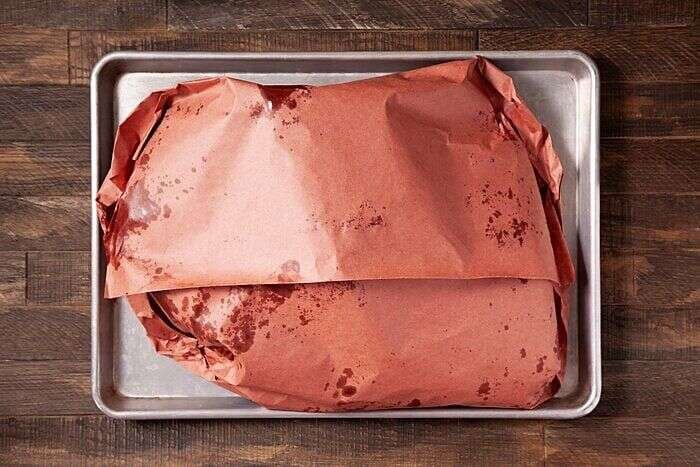
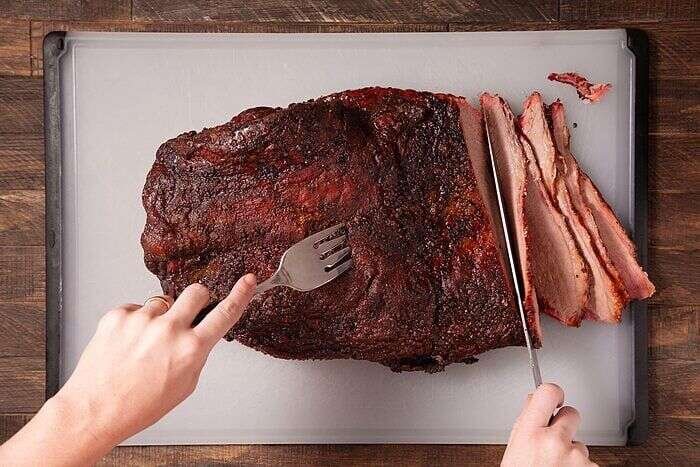
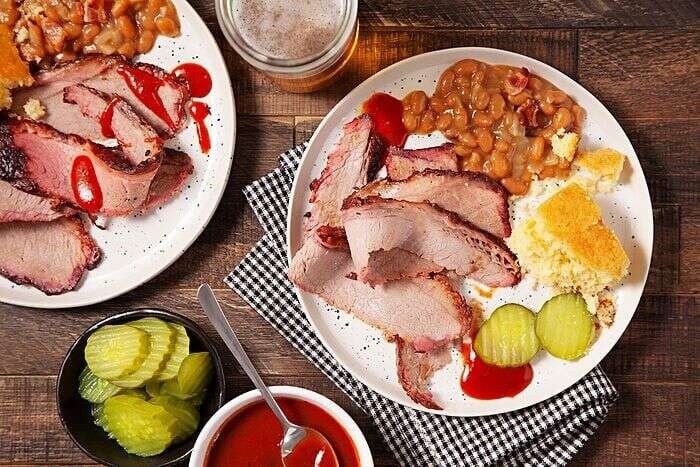
Let the wrapped beef stand at room temperature for one hour before slicing. Cut diagonally across the grain into thin slices.
My Tip: I look for the thin lines running parallel across the meat’s surface, then position my knife perpendicular to those lines. Slicing across the grain shortens the muscle fibers and makes each bite feel more tender.
How Long I Smoke Brisket
At 225°, I generally plan for about one hour per pound. A 12-pound brisket can therefore take roughly 12 hours to cook, followed by an hour of resting. I always build in extra time because briskets vary and the stall can make the cooking schedule unpredictable.
If I smoke only the flat cut, I usually expect a faster cook, around 45 minutes per pound at 225°. A typical 8-pound flat can finish in about six hours, although I still rely on internal temperature and tenderness rather than the clock alone.
Smoked Brisket Variations
- Change the smoker temperature: I don’t recommend rushing brisket, but if I need to shorten the first stage, I can increase the smoker temperature to 275°. After wrapping the brisket, I reduce the heat to 225° and finish it slowly. I keep in mind that a faster first stage can reduce the amount of smoke flavor.
- Finish the brisket in the oven: If I need to move the cooking indoors, I transfer the wrapped brisket to a sheet pan and finish it in a 225° oven. I remove it when the internal temperature reaches 202° and rest it as directed.
Can I Make Smoked Brisket Ahead?
Yes. When I make brisket a day ahead, I leave it whole and let it cool slightly. I place it in an oven-safe dish, wrap it tightly, and refrigerate it overnight. The next day, I remove it from the refrigerator 30 minutes before reheating, slice it against the grain, and return the slices to the dish. I pour 1 cup of beef broth or water over the brisket, cover the dish tightly, and reheat it in a 350° oven for 30 to 45 minutes, until warmed through.
How I Store Smoked Brisket
When I have leftovers, I prefer to keep the brisket whole because that helps reduce moisture loss. I wrap it and refrigerate it for up to four days. For sliced brisket, I use an airtight container and include the juices from the cutting board to help keep the meat moist.
I enjoy leftover brisket in sandwiches, tacos, and other meals. I can also use smoked brisket in place of corned beef in some leftover recipes when the smoky flavor fits the dish.
Can I Freeze Smoked Brisket?
Yes. I freeze smoked brisket in freezer-safe containers for up to three months. I thaw it in the refrigerator overnight and reheat it using the method above.
My Best Smoked Brisket Tips
Should I Smoke Brisket Fat Side Up or Down?
I prefer fat side up because I like the way the melting fat contributes moisture as the brisket cooks. However, fat side down can be useful when I want more fat exposed to the heat source so additional fat renders away. The best position can also depend on where the heat comes from in my smoker.
Should I Wrap Smoked Brisket at 150° or 165°?
I generally look for 165°, when many briskets reach the stall, but I also pay attention to the bark. If my brisket stalls closer to 150° and I’m happy with the bark’s color and consistency, I can wrap it earlier. If the bark needs more time, I leave the brisket uncovered until it develops the finish I want.
Where Should I Put the Temperature Probe?
I place the probe in the thickest part of the flat, near the point. I prefer the flat for temperature checks because the point contains larger pockets of fat that can give a higher reading than the meat itself. With multiple probes, I can monitor both areas for a fuller picture of the cook.
What Wood Is Best for Smoked Beef Brisket?
I can use several hardwoods for beef brisket. Oak, mesquite, and hickory give me bolder smoke, while maple and pecan are more subtle. Apple and cherry can add a sweeter character. I avoid softwoods because their resin can create bitter or unpleasant flavors.
Frequently Asked Questions
How do I know when brisket is done?
I use the internal temperature as an important guide, but I also check tenderness. For this method, the brisket finishes when the thermometer reaches 202° and the meat is very tender.
Why does brisket stall while smoking?
The stall happens when evaporative cooling slows the rise in the meat’s internal temperature. Wrapping the brisket helps limit moisture evaporation and allows the cook to continue more efficiently.
Why should I rest smoked brisket before slicing?
I rest the wrapped brisket for one hour because it gives the meat time to settle before slicing. I then cut across the grain so the finished slices are easier to chew.
Can I use foil instead of butcher paper?
Yes. I can use a double thickness of heavy-duty foil, although the brisket’s exterior can become softer than it would with unwaxed butcher paper.
Nutrition Information
Estimated per serving, based on 12 servings. Actual nutrition varies with brisket size, trimming, cooking loss, and the amount of fat consumed.
| Nutrition | Amount |
|---|---|
| Calories | ≈ 520 kcal |
| Carbohydrates | ≈ 2 g |
| Protein | ≈ 62 g |
| Fat | ≈ 28 g |
| Fiber | 0 g |
| Sugar | ≈ 1 g |
| Sodium | ≈ 1,350 mg |
Finally, Conclusion
I find smoked brisket much less intimidating when I focus on the process instead of the clock. I trim the brisket carefully, season it simply, smoke it at 225°, wrap it at the right stage, and give it a full hour to rest before slicing. With patience and a reliable thermometer, I can turn a large cut of beef into tender, flavorful brisket with a beautiful bark.

1 Comment
Pingback: Easy Slow-Cooker Sirloin Steak Recipe with Rich Gravy